

8 mins
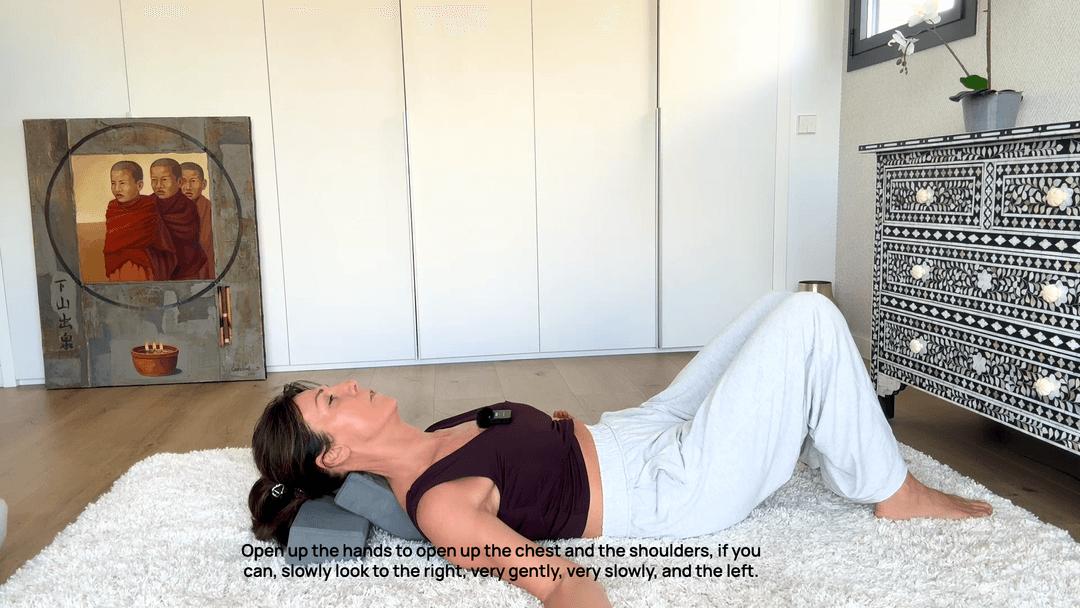
In this final video, we turn our attention to one of the most common areas of tension in the body: the neck, shoulders, and base of the skull. When this area feels tight or heavy, it’s often a sign that the upper spine has adapted to long periods of stress, posture strain, or mental overload. In this practice, I’ll guide you through three simple and gentle ways to release this area using support, breath, and small, precise movements you can do at home. There is no forcing and no stretching into intensity—just creating the conditions for the muscles, fascia, and nervous system to soften on their own. As this area begins to release, many people notice: less pressure in the neck and shoulders a softer jaw a feeling of lightness in the head and a calmer overall sense of the body This is not about “fixing” your posture from the top down. It’s about allowing the upper body to stop bracing—and giving it permission to let go. Because when the neck softens, the whole system follows.